PAVER CARE IN GREATER PEORIA

Paver Sealing &
Polymeric Sand Restoration

Refresh the surface. Restore worn joints. Choose the finish that fits your patio.

Cleaning, polymeric re-sanding and compatible sealing near Peoria, IL—for patios, walkways, entrances and suitable paver driveways.

Satisfaction GuaranteedWe stand behind our workmanship
5-Star RatedCustomer reviews
Fully InsuredConfidence for your property
Trusted by ThousandsAcross our local community
Free project estimates
Cleaning · Joint restoration · Sealing
Homes · HOAs · Commercial properties

A complete plan for the surface and the joints

Choose the work your pavers need. Your written estimate separates cleaning, joint restoration and sealing.

Paver cleaning

Address dirt, organic buildup and suitable stains with preparation matched to the material and its condition.
Polymeric sand restoration

Where suitable, remove failed joint material, prepare the joints and install compatible polymeric sand to the product’s requirements.

Paver sealing

Consider a suitable sealer after checking the paver type, old coatings, joint material and the appearance you prefer.

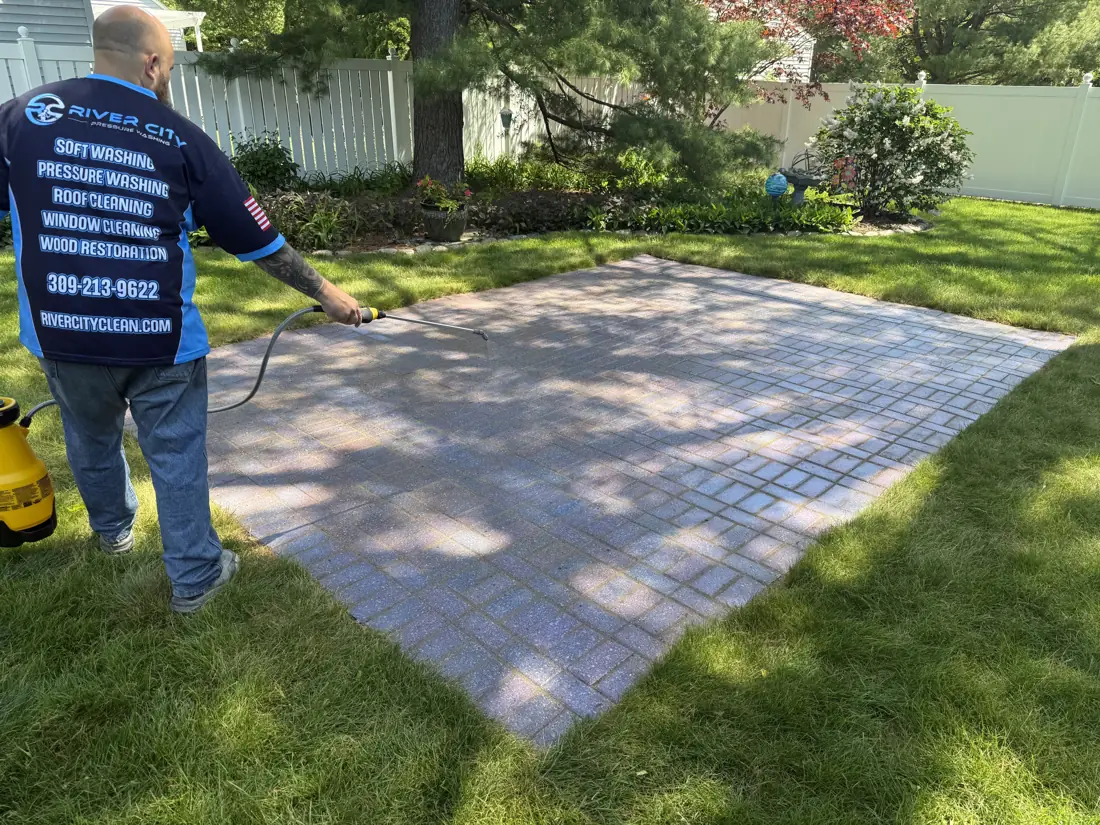
River City technician cleaning a paver patio beside a lawn.

Clean pavers are the starting point

A wash can freshen the paving, but empty joints and failing sand need their own attention. Sealing is another separate decision: it needs a clean, compatible surface and the right conditions.

We look at the paver material, joint condition, old coatings and drainage before recommending the work. You get a defined scope instead of an automatic wash-and-seal package.

Sand isn’t a fix for settlement.

Loose or sunken pavers, failing edges and drainage problems need separate repair. We identify those limits before joint work is scoped.

Restore the joints. Then choose your finish.

Polymeric sand and sealer do different jobs. Neither one replaces a sound paver installation.

Polymeric sand restoration

Polymeric sand contains binders that help it stay in suitable paver joints after proper installation and activation. It can help reduce washout and weed growth, but the preparation matters.

  • Assess the existing sand, joint width and usable depth.
  • Remove failed material and debris as agreed in the scope.
  • Install and compact compatible sand, clear surface residue and activate it to the product’s requirements.
A thin top-up is not a full restoration.

Putting a skim of new sand over failing joints can leave the underlying problem in place. Permeable paving requires its specified joint material, not a default polymeric-sand replacement.

Paver sealing

A compatible sealer can help resist certain stains and make routine care easier. Some finishes retain a natural appearance; others enrich color or add sheen.

  • Check paver material, previous sealer and surface condition.
  • Discuss appearance and wet-traction considerations.
  • Confirm a suitable product and test area before sealing.
Old sealer needs a closer look.

Clouding, peeling or an unknown coating may require additional preparation or a different plan. Sealing does not erase deep stains, repair damaged pavers or guarantee a uniform new color.

What look do you want?

Natural appearance

Discuss a compatible natural-look treatment with limited color change. Cleaning and joint restoration can also be completed without a sealer.

Richer color or sheen

Ask about a compatible color-enhancing or satin finish. The paver and product determine the result; a wet surface photo is not a finish sample.

Help choosing

Tell us how you use the space and what has been applied before. We assess suitability before recommending a finish.

Concrete or clay pavers are assessed individually. Natural stone, porcelain and permeable systems need separate compatibility checks.

A Clear Scope Before Work Begins

River City Pressure Washing assesses the surface and installation before recommending joint work or sealing.

Your estimate separates cleaning, re-sanding and optional sealing so you know which parts of the project are included.

Material and joint condition

Paver type, joint width and depth, remaining sand and previous sealer help determine the approach.

Movement and drainage

Leveling, base or drainage repairs, edge-restraint repairs and paver replacement are excluded from this service.

Access and weather

Share access needs and areas that must stay usable. Drying and curing may require separate visits.

Surface and finish compatibility

Old coatings, the selected joint material and your preferred appearance affect whether sealing is suitable.

From assessment to a clear care plan

  1. Assess the installation

    Identify paver material, joint width and depth, previous sealer, drainage and whether the system is permeable.

  2. Prepare without cutting corners

    Agree on cleaning and joint removal, protect adjacent areas and allow the drying conditions the chosen products require.

  3. Rebuild suitable joints

    Install, compact, clear residue and activate the selected material as specified. Sweeping sand across the top is only one stage.

  4. Finish with a care plan

    Apply sealing only if included and compatible. Confirm when the area can reopen and how to maintain it.

Preparing for Service & Caring for Your Pavers

Before your service

  • Share a wide photo and a close view of the joints if you can.
  • Point out loose pavers, standing water and previous sealing.
  • Arrange access and clear furniture as agreed in your scope.
  • Tell us about irrigation and areas that must remain accessible.

After joint restoration

  • Follow the project’s reopening and irrigation instructions.
  • Keep people, pets, furniture and vehicles off until permitted.
  • Remove leaves and soil before they build up in the joints.
  • Ask about ongoing hardscape care and suitable future cleaning.

Rain, cool weather and surface moisture can change the schedule. Drying and curing may require separate visits.

Paver care for homes and managed properties

Based in Marquette Heights, we assess paver projects in Greater Peoria. Include your city or ZIP so we can confirm availability for the property and scope.

For an HOA walkway, shared entrance or commercial patio, tell us about public access, business hours and areas that must stay open. We’ll discuss work stages and reopening requirements before scheduling.

Greater Peoria

Homes, HOAs and commercial properties.

Share your city or ZIP so we can confirm availability for your paver project.

YOUR PAVER PROJECT

Tell us what needs attention.

Start with your location and the condition of the pavers. We’ll review the details and discuss suitability, scope and next steps.

  • A wide photo and a close view of the joints are helpful.
  • Tell us about old sealer, loose pavers or standing water.
  • For managed properties, include access and closure needs.

Paver sealing & polymeric sand questions

Not sure which condition you’re seeing? Start with a photo and a free estimate request.

Do I need cleaning, new sand, sealing—or all three?

They address different needs. Cleaning removes surface buildup; joint restoration replaces suitable failed or missing joint material; sealing treats the surface when compatible. Your estimate separates the recommended work so you can choose.

Can you add polymeric sand over the old sand?

A thin layer over failing sand is not a reliable restoration. We assess the joints and the depth required by the selected product, then scope appropriate removal and preparation without intentionally disturbing the bedding beneath the pavers.

Will new sand stop weeds permanently?

No. Suitable, correctly installed polymeric sand can help limit weed growth and erosion, but leaves, soil and seeds can collect in joints again. Routine sweeping and appropriate care still matter.

Will this fix loose, sunken or uneven pavers?

No. Leveling, base repairs, drainage changes, edge-restraint repairs and paver replacement are excluded from this service. Movement or standing water needs assessment before joint restoration or sealing proceeds.

Will sealing make my pavers glossy or slippery?

The appearance and traction depend on the pavers, product, application and exposure. Natural-look and richer-color finishes are different options, and a wet surface may feel different underfoot. We discuss suitability and a test area, especially around steps and frequently wet areas.

Can you seal over an old coating or remove white haze?

We first assess the old coating and the source of the white or cloudy appearance. Mineral deposits, surface residue and coating problems require different approaches. Extra preparation may be needed; do not assume another coat of sealer will solve it.

How long before we can walk, park or put furniture back?

Drying and curing requirements depend on the sand, sealer, weather and installation. Work can require separate visits. You receive project-specific instructions for people, pets, furniture, irrigation and vehicles; rain resistance is not the same as being ready for traffic.

How often will the sand or sealer need attention?

There is no single interval that fits every patio. Shade, runoff, traffic, cleaning habits, product and the condition of the installation affect wear. Keep debris off the joints, clean spills appropriately and arrange a review if joints erode or the finish changes.

What if my patio uses permeable pavers?

Tell us before the assessment. Permeable paving relies on its specified joints and aggregate for drainage. Standard polymeric sand and a conventional sealing plan should not be assumed suitable.

What affects the estimate?

The area, access, amount of failed joint material, stains, previous coatings, chosen finish and preparation all affect the scope. Send your location and a short description to start; measurements and photos help but are not required for the initial request.

Bring your pavers back into the plan.

Get a free estimate for cleaning, polymeric sand restoration and compatible sealing near Peoria.