
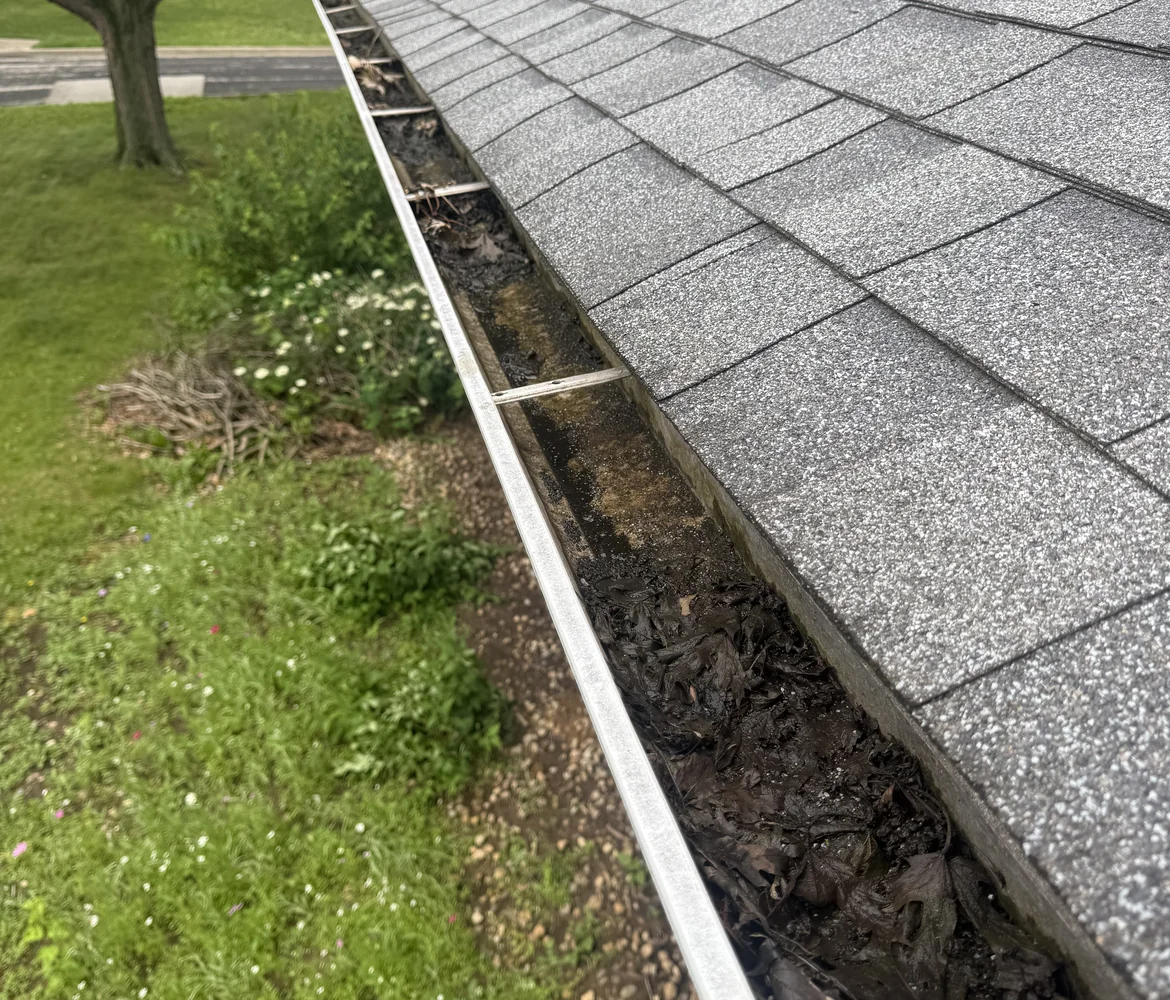
A clogged gutter matters because water may leave the intended drainage path. Overflow is a reason to investigate, but it does not by itself prove that your roof, foundation or siding is damaged. The useful next step is to locate the problem and distinguish debris from a repair issue.
For a homeowner, the “hidden” part is often the inside of the gutter. You may see water spilling over without being able to tell what is happening above the edge. A safe ground-level description is enough to start a conversation about inspection and cleaning.
Signs worth recording
- Water repeatedly spilling over the same section during rain.
- Visible leaves or other material projecting above the gutter edge.
- A downspout with little visible discharge while water escapes elsewhere.
- Staining beneath a gutter or on a nearby wall.
- Loose, sagging or detached gutter sections.
These are observations, not a diagnosis. For example, a downspout connected to a buried drain may hide the point of obstruction. Sagging or separation may require repair regardless of whether debris is present.
Why the water path matters
When runoff is diverted, it may repeatedly wet areas that were not intended to receive concentrated flow. Note whether that is happening near an entry, a wall or an area where water collects at ground level. Existing grading, drainage and building condition affect what the water does next.
Do not assume every damp basement or stained wall is caused by a clogged gutter. Recurring interior moisture, damaged fascia or other building concerns warrant the appropriate assessment. Cleaning is not a substitute for diagnosing a leak.
What gutter cleaning can address
Professional gutter cleaning can address accessible debris and buildup within the agreed scope. When requesting an estimate, explain the gutter height, any guards, difficult access and where you see overflow. Ask how downspouts are included and what will be reported if a problem remains.
Exterior gutter whitening is a different task from removing material inside the gutter. A stained outside face does not necessarily mean the trough is blocked, and clearing the inside does not automatically remove every exterior mark.
When another type of work may be needed
- Loose or damaged sections: Ask about repair before treating cleaning as the complete solution.
- Recurring overflow after cleaning: The drainage path, gutter arrangement or another obstruction may need investigation.
- Buried connections: Establish whether underground drainage assessment is outside the proposed cleaning scope.
- Interior leaking: Arrange a building or roofing assessment appropriate to the location of the leak.
Report what you have observed and when it happens. Photos taken safely from the ground can help show the location without requiring you to climb or dismantle anything.
Build a practical inspection routine
Seasonal checks are a useful starting habit, and conditions around the home can justify additional attention. Nearby trees, storms and recurring overflow are more useful clues than assuming every property needs an identical cleaning schedule.
Guards do not remove the need to pay attention. Our gutter-guard pros and cons guide explains the maintenance questions to ask about an existing or proposed system.
Frequently asked questions
Does a gutter stain mean the gutter is blocked?
No. Staining can have different causes. Record the location and any overflow you have observed so the concern can be assessed.
Can I wait until I see water spilling over?
Visible overflow is a useful warning, but a planned check can identify accumulated material before you notice a problem during rain.
Describe the problem before it becomes another unfinished task
Tell us where the overflow occurs, whether covers are installed and your property location. Request a gutter-cleaning estimate and ask for a clear scope for the accessible gutters and downspouts.