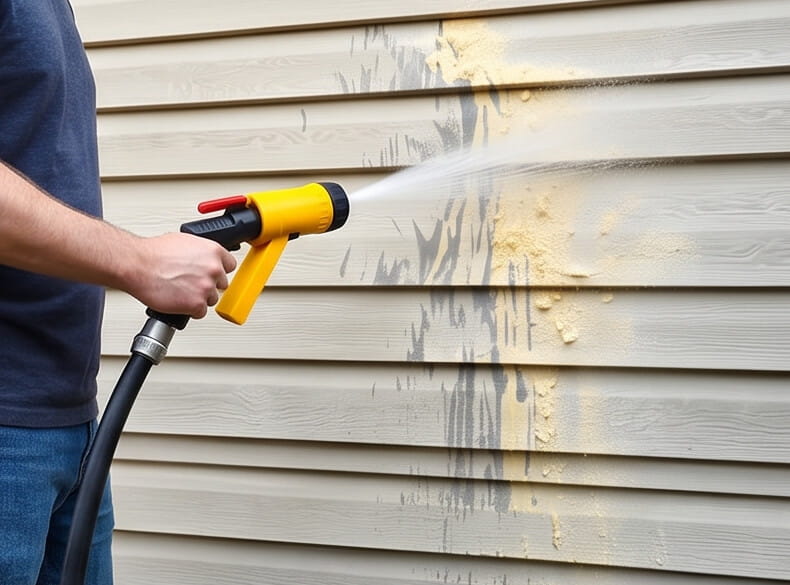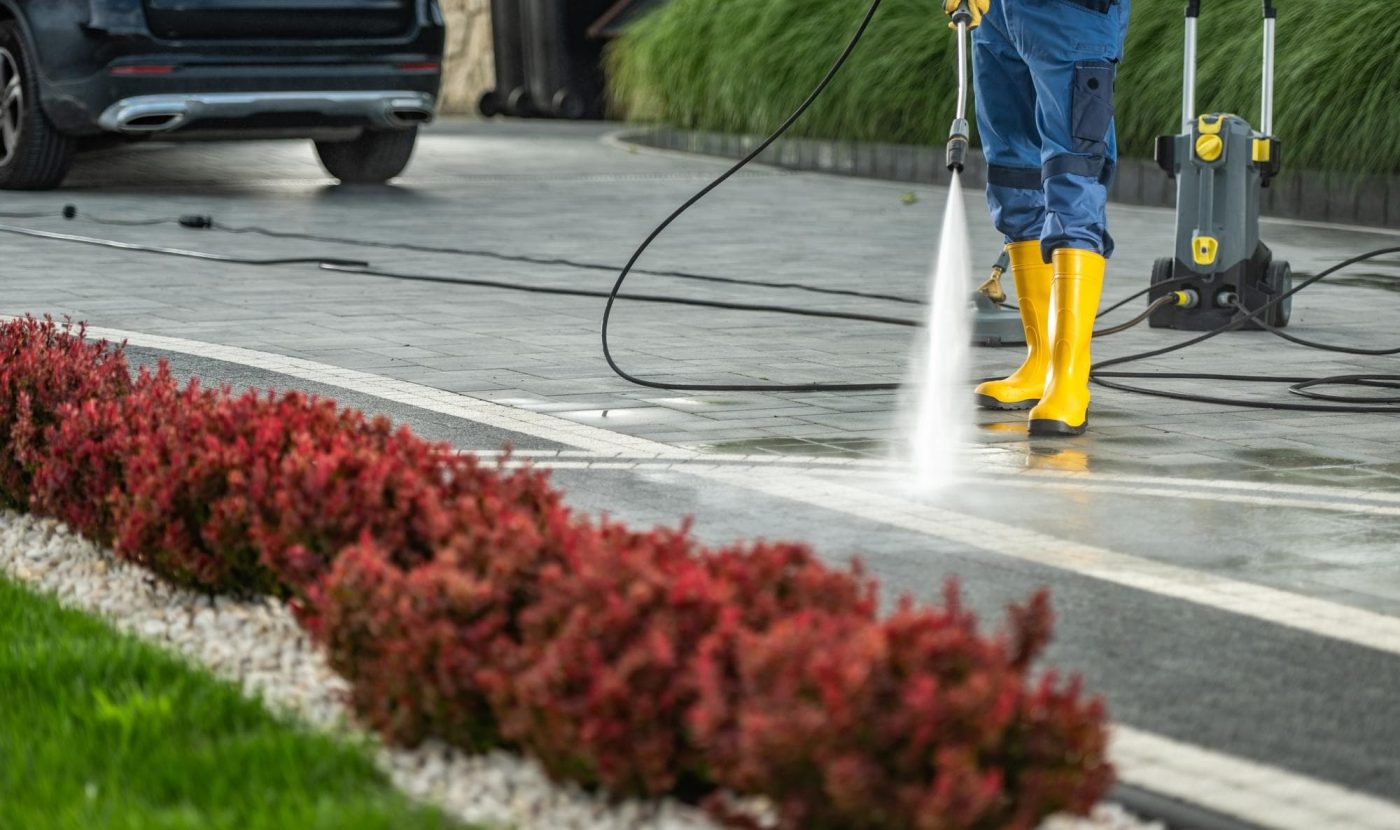
Noticed your neighbor’s siding looking suspiciously fresh after a cleaning crew came through? That’s soft washing. Low water pressure and a biodegradable cleaning solution make it safe for the surfaces a pressure washer would chew through. For soft house washing done right, the chemistry does the cleaning so the water doesn’t have to.
Three ingredients go into a soft wash solution. Water. Sodium hypochlorite, a form of bleach mixed to around a 1–3% concentration depending on the surface. And a surfactant, which makes the solution cling to vertical surfaces long enough to work so it doesn’t run straight down before doing its job.
That’s it. No high-pressure pumps, no industrial machinery.
The sodium hypochlorite does the actual cleaning by targeting the biological matter causing your siding to streak. That means algae, mold, mildew, lichen, and bacteria. The surfactant holds the mix against the surface during dwell time (usually 5 to 15 minutes), then loosens everything for an easy rinse. Water pressure during the rinse stays under 500 PSI. A standard garden hose running wide open hits about 40–60 PSI, so you’re not talking about much force at all.
“Soft” describes the pressure. The clean itself is anything but gentle on what’s growing on your house.
Pick the wrong service for the wrong surface and you’ll pay for it. Sometimes immediately. Sometimes two years later when water damage shows up behind cracked vinyl panels.
Pressure washing blasts contaminants off with mechanical force, which works fine on concrete, brick, and stone. With soft washing, chemistry kills and dissolves the contaminants. The water rinses the residue away. Designed specifically for surfaces that’d lose granules, crack at seams, or absorb water intrusion under high pressure.
Here’s how the two cleaning types map to common home surfaces.
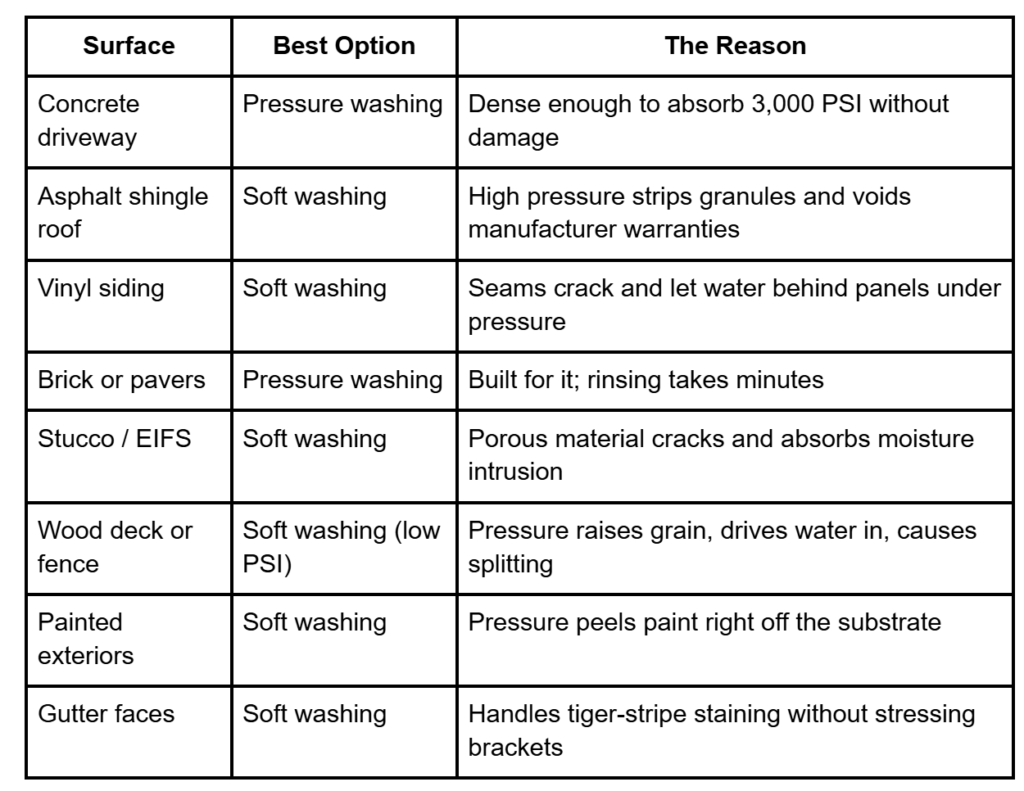
Anything with texture, porosity, or a coating calls for soft washing. The more it’d cost to replace if damaged, the less you want a pressure washer anywhere near it.
Peoria sits on the Illinois River. That’s not a minor detail when it comes to exterior cleaning. It means humidity, moisture that lingers, and shaded yards where surfaces stay damp longer than they should.
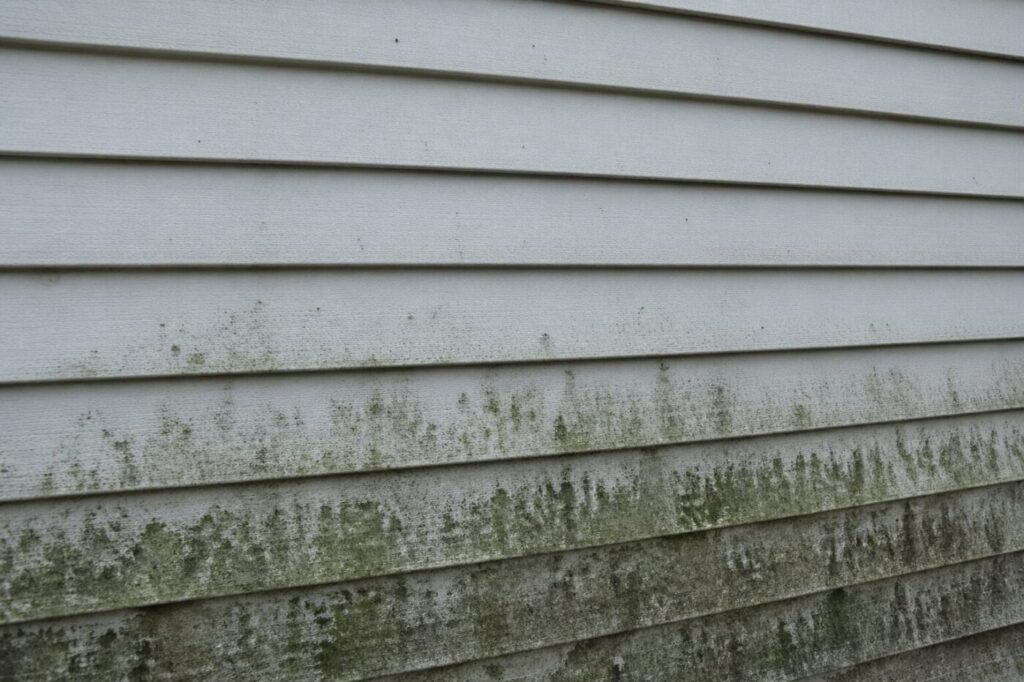
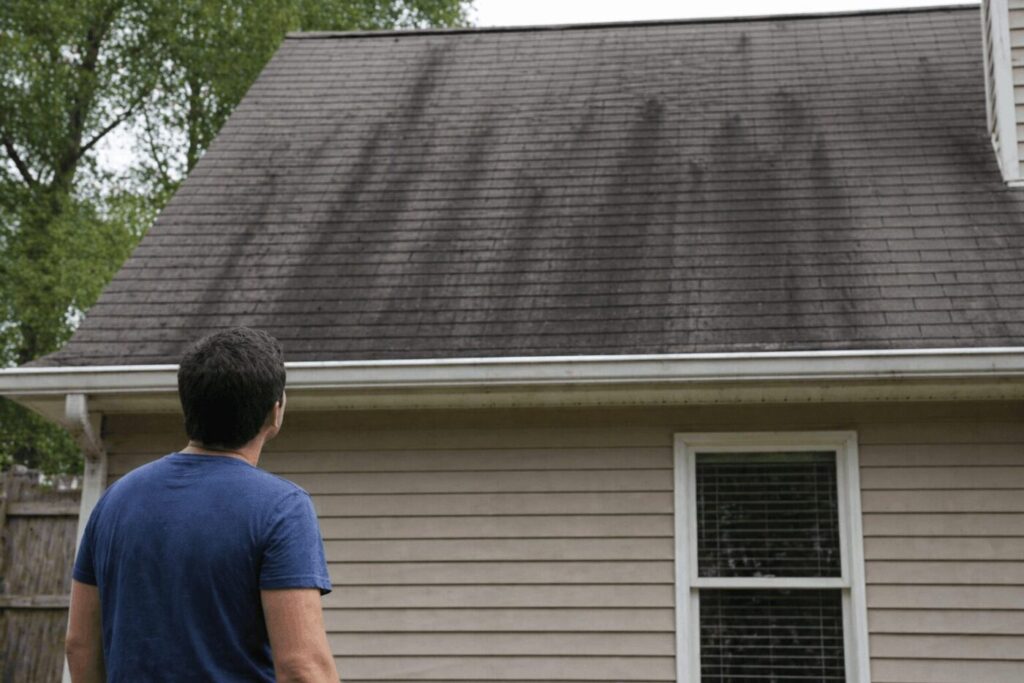
Pekin, East Peoria, Morton, and Washington share the same conditions. Hot, wet summers. Springs that arrive slow and stay soggy. Plenty of established tree cover. That adds up to perfect conditions for Gloeocapsa magma, the airborne bacterium behind those dark roof streaks, and for the algae creep that colonizes vinyl siding from the waterline up.
Most homeowners look at those dark streaks and assume the surface needs a good scrubbing, but that assumption misses the point. What’s growing on your siding is a living colony of algae that holds moisture against every surface it colonizes, quietly degrading wood and asphalt shingles long before the damage shows.
Pressure washing off the visible layer doesn’t kill it. Spores survive and regrow within months. Soft washing kills the organism at the biological level, which is why a well-done soft wash on a Peoria home lasts 2–5 years before regrowth becomes visible again.
Most homeowners get surprised by this one. Pressure washing a shingle roof voids most manufacturer warranties. The Asphalt Roofing Manufacturers Association explicitly recommends low-pressure washing for a reason. High-pressure water strips the protective granule layer right off shingles. Soft washing clears those black streaks without touching the granules at all.
Vinyl’s seams crack under sustained pressure, and once they crack, water gets behind the panels. A soft wash solution soaks into the surface texture of vinyl where organic staining takes root and pulls it out, something blasting with water never manages as thoroughly. If your siding has been collecting that green waterline creep, professional house washing with a proper soft wash setup clears it without risking the panels.
Porous by design, and that porosity works against them here. Water forced in at high pressure carries moisture behind the coating; soft washing cleans the face without compromising what’s underneath.
Wood grain opens under high-pressure water, and once open, moisture drives in deep and the surface splinters. A soft wash with a low-pressure rinse lifts the organic growth, leaves the grain intact, and preps the wood for sealing in a way that actually holds a stain.
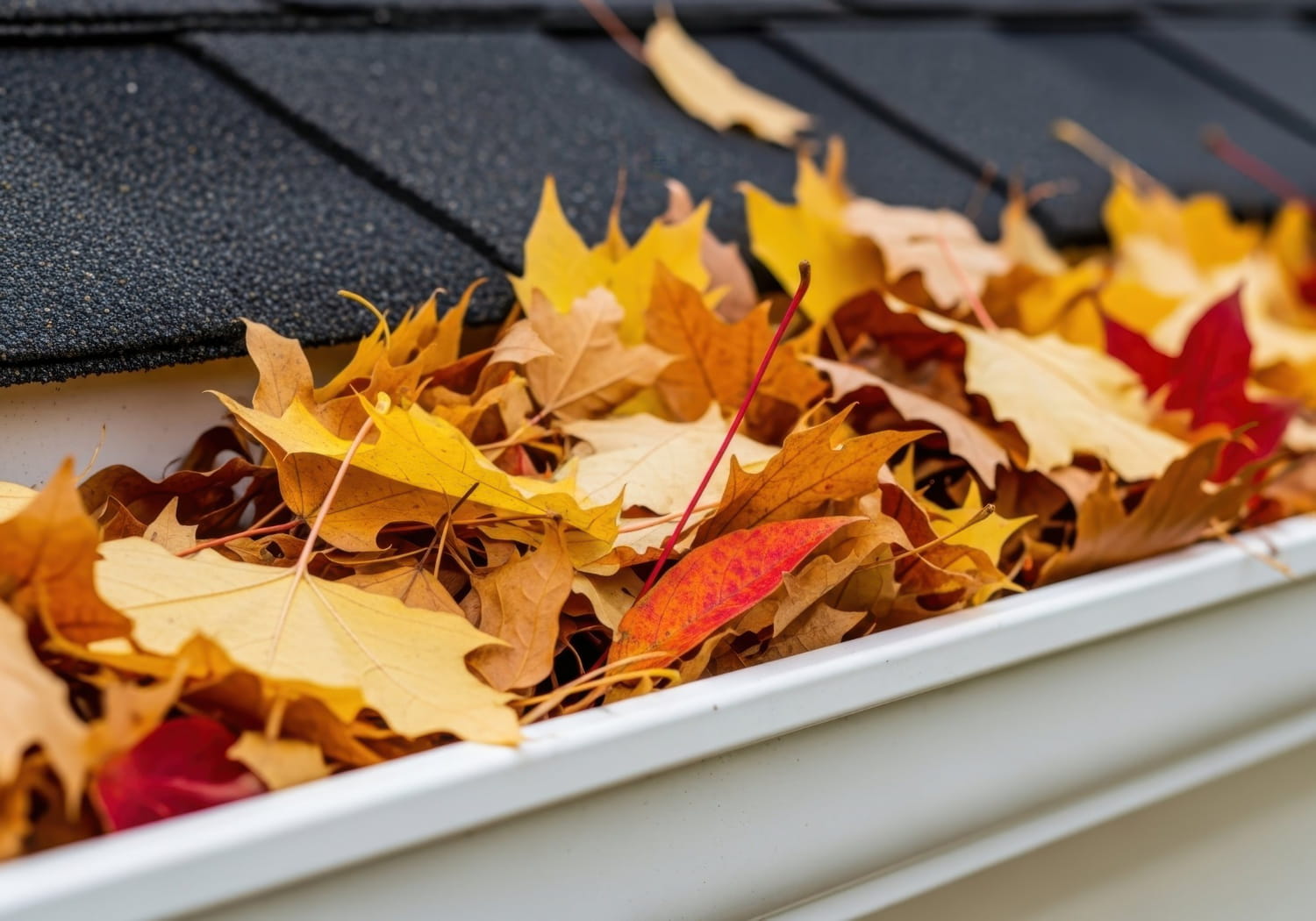
Those black vertical streaks running down your gutter faces, called tiger striping, come from oxidation and algae running off the roof. Soft washing removes them cleanly. Pressure washing stresses the gutter hangers and mostly just pushes the streaks around.
Pressure washing strips the surface. Soft washing kills the biology underneath it. Regrowth can’t gain a foothold when the spores and root structures are eliminated entirely, not just scraped off the top, and that’s why results last as long as they do.
Here’s how long a professionally applied soft wash holds by surface type.
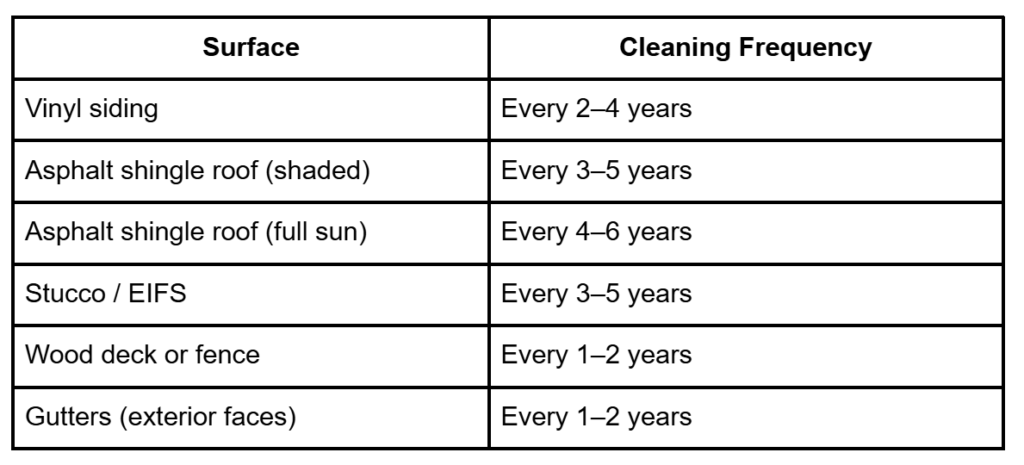
Most Peoria-area homeowners who schedule soft washing on a regular cycle stop dealing with the creeping green line on their siding mid-summer. Less maintenance, better curb appeal, surfaces that aren’t quietly deteriorating underneath the staining.
Before anything gets mixed, a professional scans every surface. The sodium hypochlorite concentration needs to match what’s being cleaned. A heavily algae-stained roof takes a stronger dilution than lightly streaked vinyl siding. Get that ratio wrong and you’re either under-cleaning or damaging what you’re trying to protect.
Application runs through a dedicated low-pressure soft wash pump, not a converted pressure washer with a downstream injector. Solution goes on evenly, dwell time runs its course, then a low-pressure rinse carries everything off the surface.
Landscaping protection happens before the chemical goes on. Plants and grass get pre-wetted, rinsed off afterward. A crew that skips that step is cutting corners worth caring about. At River City Clean, biodegradable surfactants are standard, and protecting your flowerbeds isn’t an afterthought.
Your siding and roof aren’t decorative. They’re what stands between your home’s structure and Central Illinois weather. Soft washing stops the deterioration, and after working through hundreds of homes across Peoria, Pekin, Morton, and the surrounding communities, River City Clean wouldn’t clean those surfaces any other way.
Contact us today to schedule your professional house washing service and give your home the care it deserves.